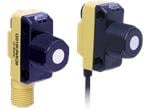

QS18UNAEQ5

Banner Engineering
778-QS18UNAEQ5
QS18UNAEQ5

製造商:

說明:
Proximity Sensors - Industrial WORLD-BEAM QS18U: Ultrasonic remote TEACH; Range: 50-500 mm; Input: 12-30 V dc; Output: NPN; Epoxy-encapsulated; 150 mm (6 in) 4-pin M12 Pigtail QD

供貨情況

庫存:
暫無庫存
工廠前置作業時間:
3 週 工廠預計生產時間。
最少: 1   多個: 1
單價:
HK$-.--
總價:
HK$-.--
估計關稅:
此產品免費航運

Pricing (HKD)

數量 單價
總價
HK$1,619.34 HK$1,619.34

商品屬性 屬性值 選擇屬性
Banner Engineering
產品類型: 近接感測器 - 工業用
Ultrasonic
50 mm
500 mm
NPN
Mounting Bracket
Cable with Connector
150 mm
M12
Pin
4 Pin
12 VDC
30 VDC
QS18U
品牌: Banner Engineering
組裝國家: Not Available
擴散國: Not Available
原產國: CN
外殼材料: Acrylonitrile Butadiene Styrene (ABS)
IP額定值: IP68
最高頻率: 300 kHz
最高工作溫度: + 60 C
最低工作溫度: - 20 C
產品類型: Ultrasonic Sensor
原廠包裝數量: 1
子類別: Sensors
公司名稱: WORLD-BEAM
零件號別名: 73163
每件重量: 20 g
找到產品:
若要顯示類似商品,請選取至少一個核選方塊
至少選中以上一個核取方塊以顯示在此類別中類似的產品。
所選屬性: 0

CAHTS:
8543700000
USHTS:
8543704500
JPHTS:
854370000
ECCN:
EAR99

WORLD-BEAM QS18U Ultrasonic Sensors

Banner Engineering WORLD-BEAM QS18U Ultrasonic Sensors are miniature ultrasonic sensors with TEACH-mode programming. These sensors are versatile, accurate, and effective solutions for the toughest application challenges. Banner ultrasonics feature built-in temperature compensation, allowing the sensor to self-correct for its environment and maintain the highest sensing accuracy in changing conditions. Ultrasonic sensors use sound waves, not light, and this makes them ideal for problematic clear material sensing applications. Ultrasonic sensors emit one or multiple pulses of ultrasonic energy, which travel through the air at the speed of sound. A portion of this energy reflects off the target and travels back to the sensor. The sensor measures the total time required for the energy to reach the target and return to the sensor.  Use ultrasonics to effectively and accurately sense liquids, clear objects, and targets in dirty environments. Ultrasonics like the Banner Engineering WORLD-BEAM QS18U Ultrasonic Sensors are inherently impervious to color differences, high reflectivity, and glare, all of which are application challenges for photoelectrics.